







Collagen and Weight Loss
Posted
Updated February 17, 2026

Posted
Updated February 17, 2026


Understanding the difference between collagen and protein powder can help you make better choices for your wellness goals, whether that’s muscle growth, skin and joint support, or daily protein intake. Although both contain amino acids and count as proteins, they serve very different purposes in your diet and body. What Is Collagen? Collagen is the most abundant structural protein in the body, found in skin, bones, cartilage, tendons, hair, and nails. It provides strength, elasticity, and support to connective tissues. Unlike many protein powders (like whey or plant proteins), collagen: Is not a complete protein, it doesn’t contain all nine essential amino acids. Is rich in specific amino acids such as glycine, proline, and hydroxyproline, which help support tissues and structures throughout the body. Why take collagen powder? May support skin hydration and elasticity Helps maintain joint comfort and mobility Supports gut health Offers structural amino acids that can decline with age What Is Protein Powder? In contrast to collagen, most protein powders (including whey, plant-based, egg and casein) are designed to help you meet daily protein requirements and support functions like muscle maintenance, repair and growth. Protein powders differ based on their amino acid profile, digestibility, dietary preferences and goals. Scientific research indicates that both animal and plant proteins can support muscle mass and strength gains when total protein intake is adequate, although animal protein often shows a modest advantage in lean mass development due to higher essential amino acid availability (Santini, M, 2025). Protein powders are often used to support: Reaching daily protein goals Muscle recovery and strength gains Weight management and satiety Convenient nutrition when whole foods aren’t available Which One Should You Choose? When you’re choosing between collagen powder and a more traditional protein powder, it really comes down to what you’re trying to support in your life and body, not that one is “better” than the other for everyone. If your main goal is to meet daily protein needs, support muscle recovery after workouts, or build strength over time, a more complete protein powder (whether that’s whey or a thoughtfully blended plant-based option) tends to fit those needs more directly. These powders are formulated with all the essential amino acids your body looks for when it’s rebuilding and repairing tissues after movement or exercise. On the other hand, if you’re more focused on things like skin resilience, joint comfort, or connective tissue support, collagen protein can feel like a more tailored choice. Because it’s rich in specific amino acids that your body uses for structural proteins like collagen in skin and cartilage, many people find it helpful as a complement to their overall routine. Some individuals choose to use both. For example, a general protein powder after workouts to support muscle and strength goals, and collagen at other times to support skin, joint, or tissue health. There’s nothing stopping you from combining them, as long as you’re keeping an eye on your overall protein intake and how you feel. Everyone’s body and priorities are a little different, so it can be worth experimenting to find what feels best for you. Goal Recommended Muscle building and athletic performance Protein powder Skin, joints, hair, nails Collagen powder Balanced dietary protein Protein powder Targeted connective tissue support Collagen References Santini, M. H., Erwig Leitão, A., Mazzolani, B. C., Smaira, F. I., de Souza, M. S. C., Santamaria, A., Gualano, B., & Roschel, H. (2025). Similar effects between animal-based and plant-based protein blend as complementary dietary protein on muscle adaptations to resistance training: findings from a randomized clinical trial. Journal of the International Society of Sports Nutrition, 22(1), 2568047. https://doi.org/10.1080/15502783.2025.2568047
read more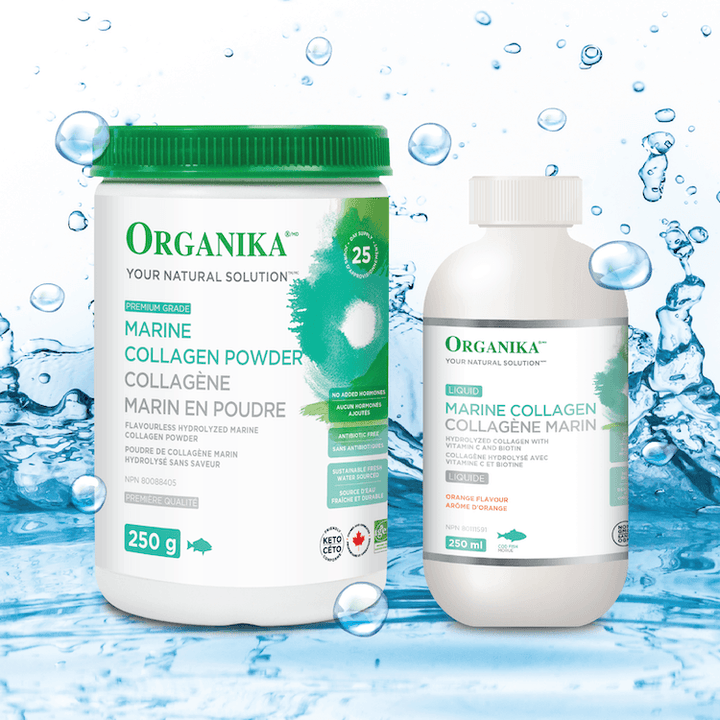
By now, you’ve probably heard all about the benefits of collagen and why collagen supplements have become so popular for supporting skin, joints, hair, gut health, and overall wellness. Great! But one question comes up again and again: is collagen powder better than liquid collagen?Which form is absorbed best, and which one delivers the most benefits? Let’s break it down. A Look at the Most Popular Forms of Collagen Supplements Collagen Powder Collagen powder is the most common and widely used form of collagen supplements. In fact, collagen exists in powder form before being dissolved into liquids. Most collagen powders are made from hydrolyzed collagen peptides, which means the large collagen proteins are broken down into smaller peptides for easier digestion and absorption. TIP: Always look for hydrolyzed collagen peptides powder when choosing a collagen supplement. If you’re not sure where to start, an unflavoured option that blends easily (like Enhanced Collagen Original) can be a simple, no-fuss pick for everyday use. The majority of scientific studies on collagen benefits have used collagen powder, which is why it is considered the most researched and well-supported format. How to use: Mix into water, coffee, smoothies, soups, baked goods, or foods of choice. Best for: Anyone who enjoys customizing how they take their collagen. Liquid Collagen Liquid collagen supplements are essentially collagen powder that has already been dissolved into a drink, often with added natural flavours or functional ingredients. Because of this, liquid collagen typically contains less collagen per serving compared to collagen powder. To reach the same collagen dosage, you may need to consume a larger volume of liquid—though for many people, the tradeoff is that it’s quick, easy, and requires zero prep. If you like the ready-to-take format but still want something that feels purposeful, a liquid option like Liquid Enhanced Collagen or Liquid Marine Collagen can be a convenient way to keep collagen support consistent, especially on busy days. Traditionally, most liquid options were made from marine collagen, but there are now both marine and bovine-based liquid collagen supplements available. How to use: Drink as directed, either as a full serving or by tablespoon depending on the product. Best for: Those who prefer convenience and ready-to-drink collagen. Collagen Capsules Collagen capsules simply contain powdered collagen, meaning they offer the same benefits as collagen powder—just in a convenient pill format. If you like the simplicity of a grab-and-go routine, something like BioCell Collagen Capsules can be an easy option to keep on hand for consistent daily support. How to use: Take as directed with water. Best for: People who prefer capsules over mixing powders into drinks or food. Your Collagen Questions Answered Which form is better absorbed, powder or liquid? All high-quality collagen supplements should be hydrolyzed, meaning the proteins are broken down for easy digestion and absorption. Since liquid collagen is just powdered collagen dissolved in liquid, both powder and liquid collagen are equally absorbable. The improved absorption comes from the hydrolyzation process, not from whether the collagen is taken in powder or liquid form. Are there added ingredients in one form versus another? Liquid collagen often includes added ingredients such as natural flavours or complementary nutrients. There are also collagen blends in powder form that combine collagen with other supplements for convenience. These blended formulas simply provide additional functional support alongside collagen. Which collagen format is most effective? Research shows that collagen supplements are effective, and most studies use collagen powder. Some liquid-only collagen brands claim higher bioavailability, but there is currently no scientific evidence showing that liquid collagen is absorbed better than powder. Again, it is the hydrolyzed collagen peptides that improve absorption, regardless of format. How much collagen do I get from powder versus liquid? Collagen powder typically contains significantly more collagen per serving than liquid collagen. For example: • 1 tablespoon of collagen powder may provide around 5 grams of collagen• 1 tablespoon of liquid collagen may provide around 1.5 grams of collagen This means you would need to consume much more liquid collagen to match the collagen intake of powder. With collagen powder, most people use 1 to 2 scoops per day. With liquid collagen, you may need multiple servings throughout the day to reach similar collagen levels. What Do the Experts Say? Many naturopaths and nutrition professionals agree that while liquid supplements in general may be absorbed slightly faster, collagen is not a quick-fix supplement like cold medicine. Because collagen works over time and is more potent in powder form, collagen powder is often preferred for long-term use. Nutritionists also point out that since both powder and liquid collagen come from the same hydrolyzed collagen source, both are bioavailable and absorbed well in the gut. Ultimately, both formats work in the same way. What Really Matters The best form of collagen is the one that fits your lifestyle. Collagen powder offers higher collagen content per serving and versatility, while liquid collagen provides convenience. More important than the format is: • The quality of the collagen• Whether it is hydrolyzed• The source of the collagen (marine or bovine) Choosing a high-quality collagen supplement will have a far greater impact than choosing between powder, liquid, or capsules. Learn more about collagen types here. REFERENCES: https://pubmed.ncbi.nlm.nih.gov/33742704/ de Miranda RB, Weimer P, Rossi RC. Effects of hydrolyzed collagen supplementation on skin aging: a systematic review and meta-analysis. Int J Dermatol. 2021 Dec;60(12):1449-1461. https://pubmed.ncbi.nlm.nih.gov/31411379/ Jhawar N, Wang JV, Saedi N. Oral collagen supplementation for skin aging: A fad or the future? J Cosmet Dermatol. 2020 Apr;19(4):910-912.
read more
Marine Collagen: Beauty from the Sea You may be seeing marine collagen or hearing about it, but unsure what the difference between that and bovine collagen is, and/or which one you should be consuming. As expected, Marine collagen comes from fish and is rich in Type 1 collagen. The collagen from this source is pescatarian-friendly for those that do not consume bovine (which also has Type 1 collagen). However, there seems to be an ongoing debate over what is the best source of collagen and why some may opt for a marine source. We are diving into all things marine collagen and answering all your questions about it. Where does marine collagen come from? As the name implies, marine collagen comes from the sea – derived from fish scales, bones, and skin. Organika's Marine Collagen powder is sourced from Canada! It comes from the scales of wild-caught cod, pollock and haddock. What is marine collagen used for? What are the known benefits? Collagen, in general, is used to help with skin health (specifically with aging skin, wrinkles), stronger hair and nails, as well as promoting joint health. Rich in Type 1 collagen, marine collagen is linked with beauty benefits and tissue repair. Some of the most popular benefits of marine collagen include: Rejuvenated skin Improved skin texture and hydration Fuller and smoother hair Stronger nails Faster-growing hair and nails Reduced cellulite Why do some people prefer marine collagen? Some may consider marine collagen a more sustainable alternative. The fishing industry often has a lot of unused raw materials from the fish they catch, including the fish skins where marine collagen comes from. In that case, marine collagen can be a more comfortable choice as it may seem to offer a more economical and environmentally friendly option for various companies. Consumers may like to see that instead of wasting fish skins, companies can use the excess materials to create other products. Is marine collagen better than bovine collagen? This is the million-dollar question consumers are asking. The truth: although they come from different sources, fundamentally, the type of collagen from both sources is the same. Collagen is a large molecule, so for it to be efficiently absorbed and utilized by the body, it must first be broken down into smaller pieces, which you may have heard of as collagen peptides. Furthermore it must go through a process known as hydrolyzation: natural enzymes break down collagen into the smaller collagen peptides, without the use of heat or chemicals. High bioavailability in a collagen supplement is assured by the size of its peptide molecules, known as the molecular weight. The smaller the molecular weight, the easier it is for collagen peptides to reach the blood stream and be effectively used in the body. Both Organika’s marine and bovine collagen go through these processes for high bioavailability and ease of digestion. The nitty gritty: marine collagen naturally boasts a lower average molecular weight than any other collagen source - Organika's weighs in at an impressively low 2-2.5 kDa, compared to an average 40-45 kDa in most bovine collagens. However, bovine collagen can have a molecular weight comparable to that of marine collagen - all it takes is more rounds of hydrolization. This is how we achieve a molecular size of under 3 kDa for our bovine-sourced Enhanced Collagen Original! So essentially, what it comes down to is personal preference and dietary restrictions. It can also be beneficial to combine a variety of collagen supplements (bovine, bone broth, marine and even poultry-sourced collagen) for optimal health. Want options for Marine collagen? There is something for everyone – whether you prefer powder, capsules, liquid, or a water enhancer – there is a collagen option for you. Marine Collagen PowderHigh in type 1 collagen, which is essential for maintaining skin, hair and nail health. Hydrolyzed for easy digestion, our marine collagen powder is also tasteless, easily mixing into beverages or foods. Salmon Collagen Capsules Convenient capsules more your thing? Try our Salmon Collagen Capsules. Because they're higher in omega-3 fatty acids, in addition to beauty health you get support with joint pain associated with osteoarthritis. Note: some people prefer salmon capsules for marine collagen because of the omega-3s that have added skin and arthritis benefits. Liquid Marine Collagen If you prefer liquid or flavoured (with orange), you must try this beauty elixir. Made with marine collagen, 200 mg Vitamin C, and 500 mcg biotin, you are getting the ultimate beauty benefits. Effervess A convenient source of marine collagen and vitamin C in a fizzy tablet that will give your water (and your skin) a makeover. Enjoy a variety of flavours: Kiwi, Cranberry, Rose, Lavender and Honey Peach The contents of this article have been fact-checked and reviewed by Registered Holistic Nutritionists.
read more