










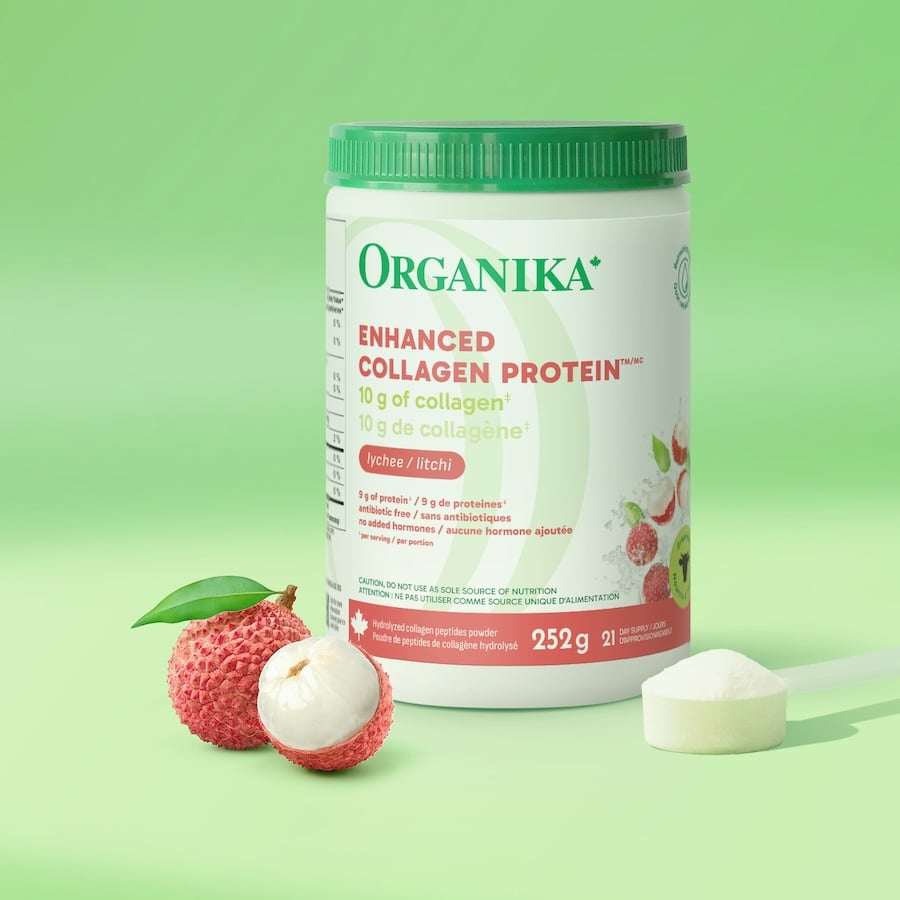
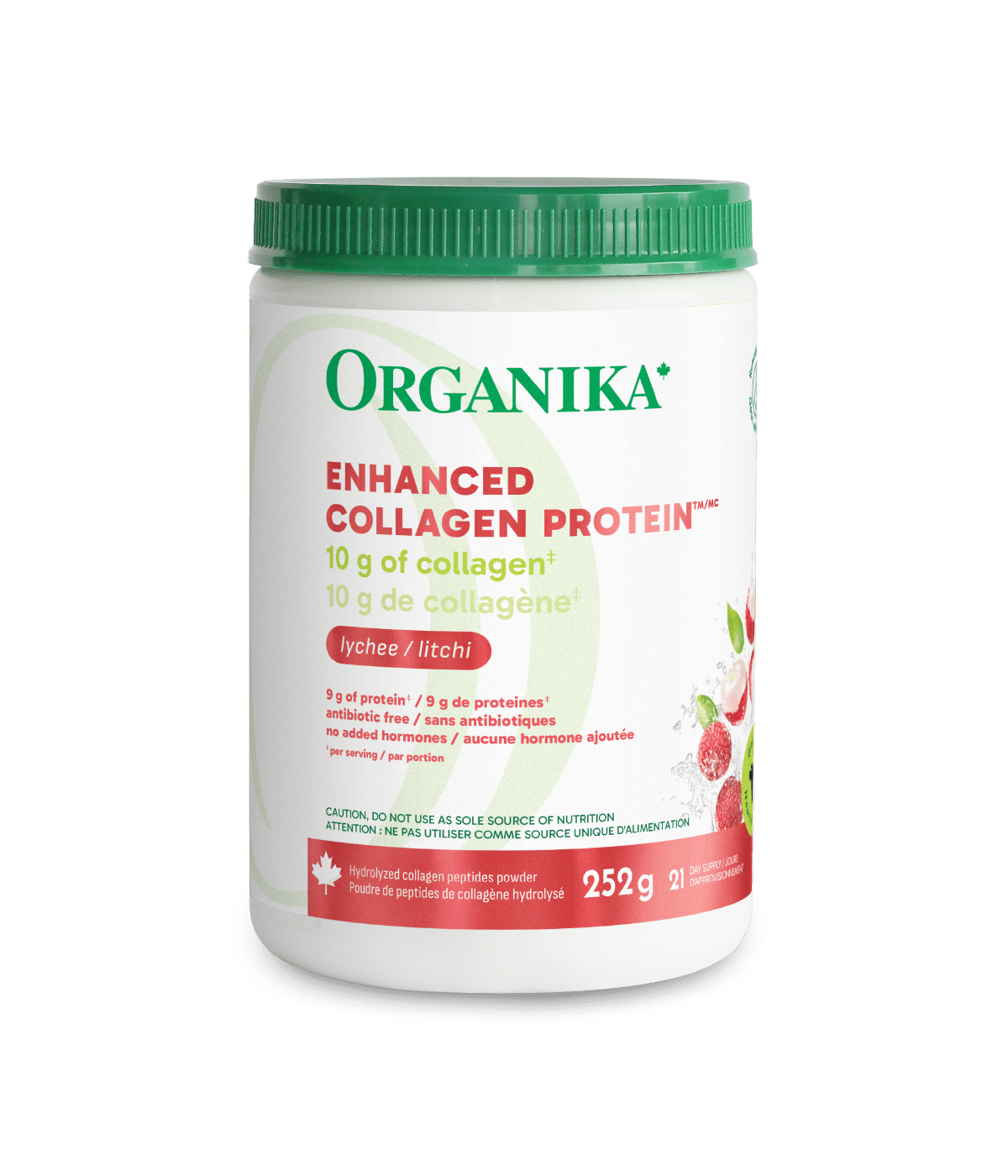
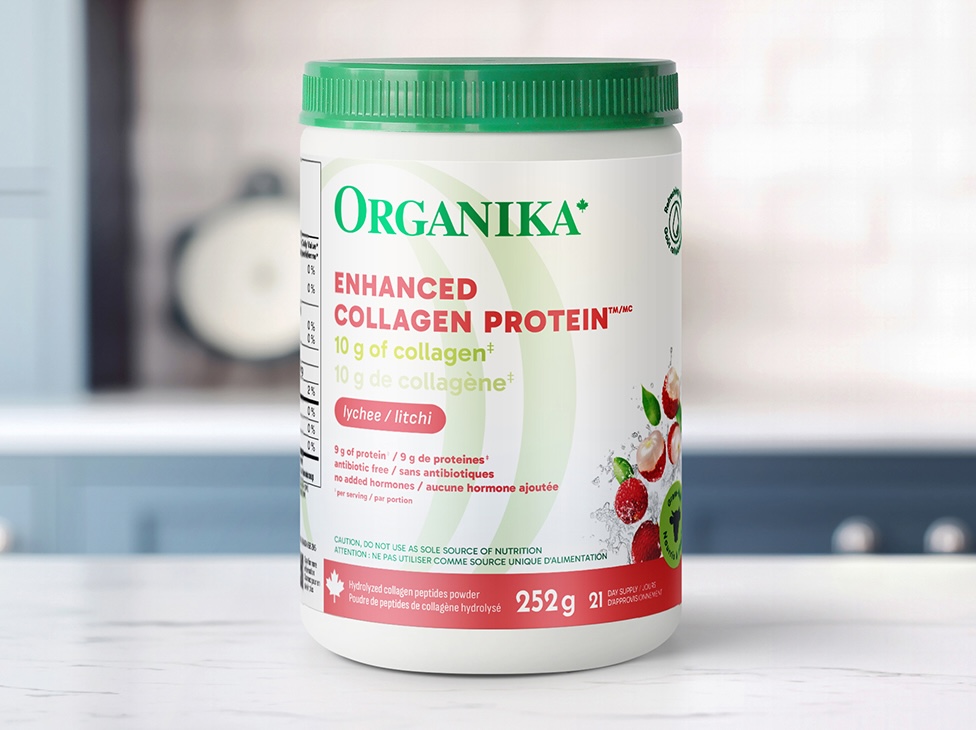
Lychee Enhanced Collagen Protein
Lychee flavoured collagen for healthier skin, hair, nails, joints, and gut
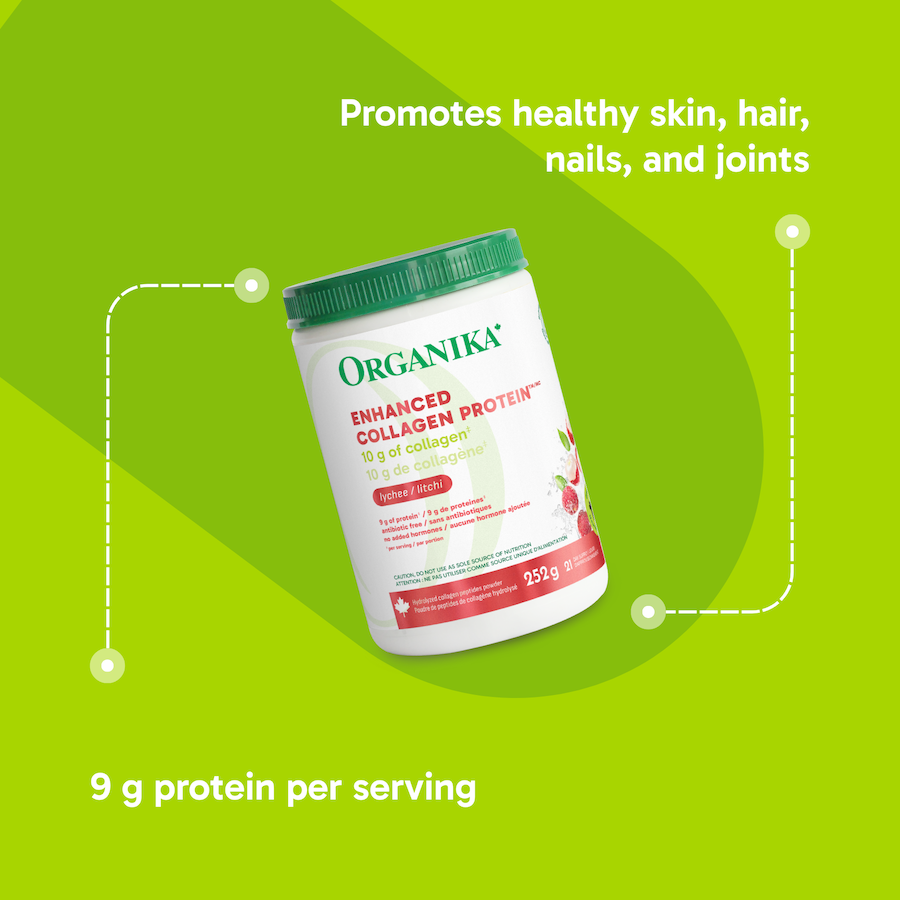
- Promotes healthy skin, hair, and nails
- Helps reduce joint pain linked to osteoarthritis
- Supports bone density and healthy digestive linings
- 9 g protein per serving
Couldn't load pickup availability


Notify Me When Available
Enter your email and we'll let you know as soon as this product is back


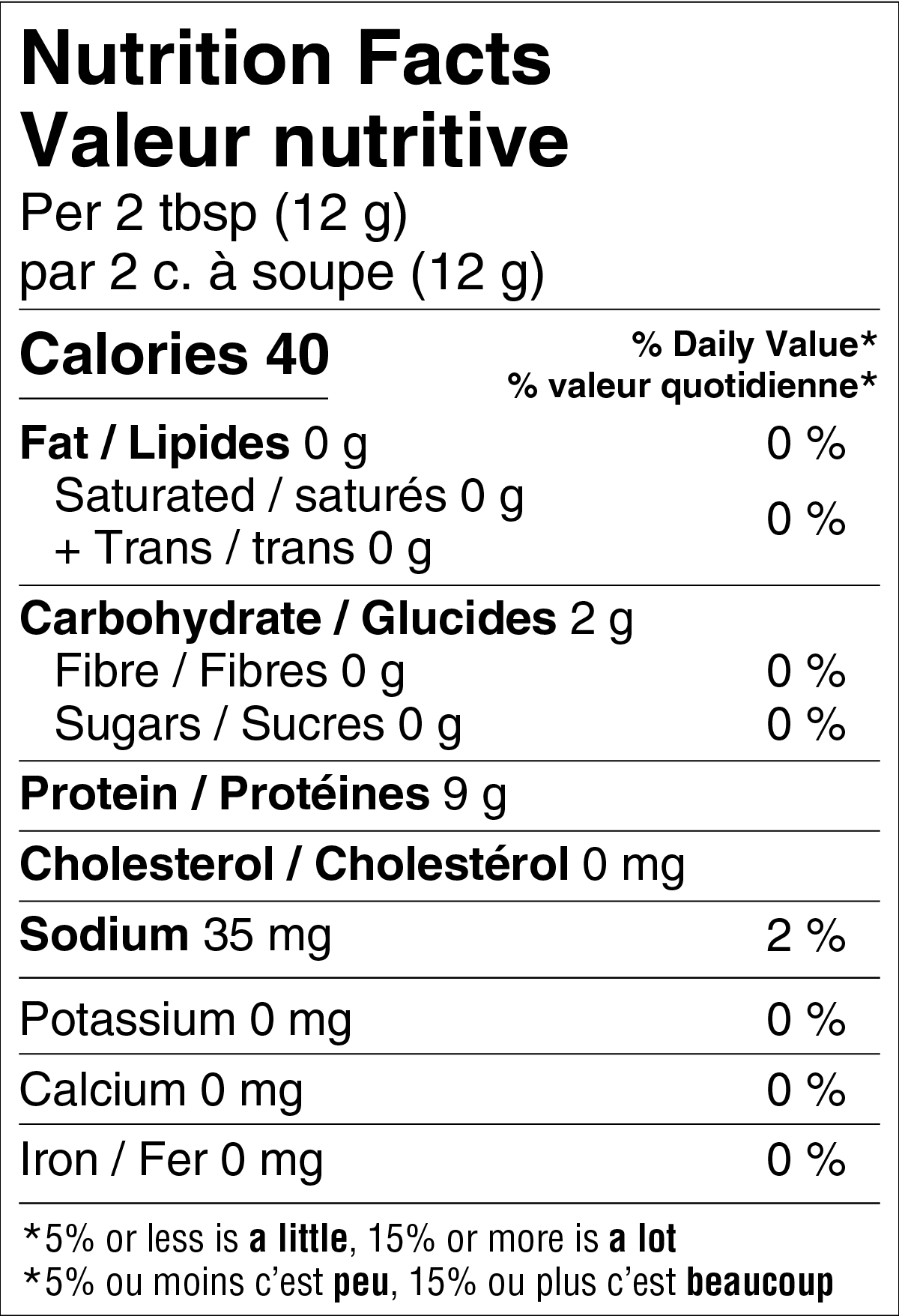
Supplement Facts


Ingredients & Nutrition
Hydrolyzed bovine collagen, Citric acid, Natural lychee flavour, Stevia extract.
RECOMMENDED DOSE - Mix 1 serving (12 g or approx. 2 tablespoons) in half a cup or more of cold or hot water, tea, or your favourite smoothie daily.
Is This Right for You?
Looking for a single-ingredient collagen?
Want support for joints, skin and muscle?
Looking for a collagen that's flavourless, odourless and dissolves into hot or cold drinks without clumping?
Dealing with joint stiffness or skin changes?
If you answered ''yes'' to any of the above, this product is right for you.
-
Helps reduce joint pain linked to osteoarthritis
-
Supports bone density and healthy digestive linings
Collagen support + 9 g of protein in a delicious lychee drink is self-care that tastes like a treat
The Full Scoop
-
Helps reduce joint pain linked to osteoarthritis
-
Supports bone density and healthy digestive linings
This lychee flavoured collagen powder supports protein synthesis, skin health and joint function, and is sourced for quality and formulated without additives. Each serving includes 9 g of protein with essential and non-essential amino acids. This includes lysine to support collagen formation, glycine and proline for connective tissue repair and branched-chain aminos to help maintain muscle mass. Taken daily, this collagen helps reduce joint pain associated with osteoarthritis and supports the structure and appearance of healthy skin.
Oh, and did we mention it's made with Canadaís #1 Collagen Powder?
Ask Away
We’ve got the FAQs covered. But if you’re still stuck, we’re only a message away.
Get in TouchWhat type of collagen is the Enhanced Collagen Protein Lychee?
Type 1 and 3.
What is hydrolyzed collagen?
Hydrolyzed collagen, also known as collagen peptides, is a form of collagen that has undergone a process called hydrolysis to break down the protein into smaller molecules, making it easier for the body to absorb.
What are the benefits of hydrolyzed collagen?
Hydrolyzed collagen may support healthy skin, hair, nails, joints and bones. It's also known to promote gut health and may aid in muscle recovery.
How do I use this product?
Mix 1 serving (12 g or approx. 2 tablespoons) in half a cup or more of cold or hot water, tea or your favourite smoothie daily.
Is this product suitable for vegetarians or vegans?
No, this product is derived from bovine (cow) collagen and is not suitable for vegetarians or vegans.
Are there any allergens in this product?
This product contains collagen sourced from bovine skin. If you have allergies to beef or are sensitive to certain proteins, please consult with a healthcare professional before use.
Is this product safe for pregnant or nursing women?
While collagen is generally considered safe for most individuals, it's always best to consult with a healthcare professional before using any dietary supplement, especially during pregnancy or while breastfeeding. Visit our blog: Is it safe to take collagen while breastfeeding?
How long does it take to see results from using this product?
Results may vary from person to person, but many users report noticing improvements in skin elasticity, joint health, and hair and nail growth within a few weeks to a couple of months of consistent use.
Can I take this product if I have a medical condition or am taking medication?
If you have any underlying medical conditions or are taking medication, it's important to consult with a healthcare professional before adding any new supplement to your routine. They can provide personalized guidance based on your individual health needs.
Can I mix this collagen supplement with hot beverages?
Yes, Enhanced Collagen is heat-stable and can be mixed with hot beverages such as coffee, tea, or soup without losing its effectiveness.
You'll Likely Also Love...
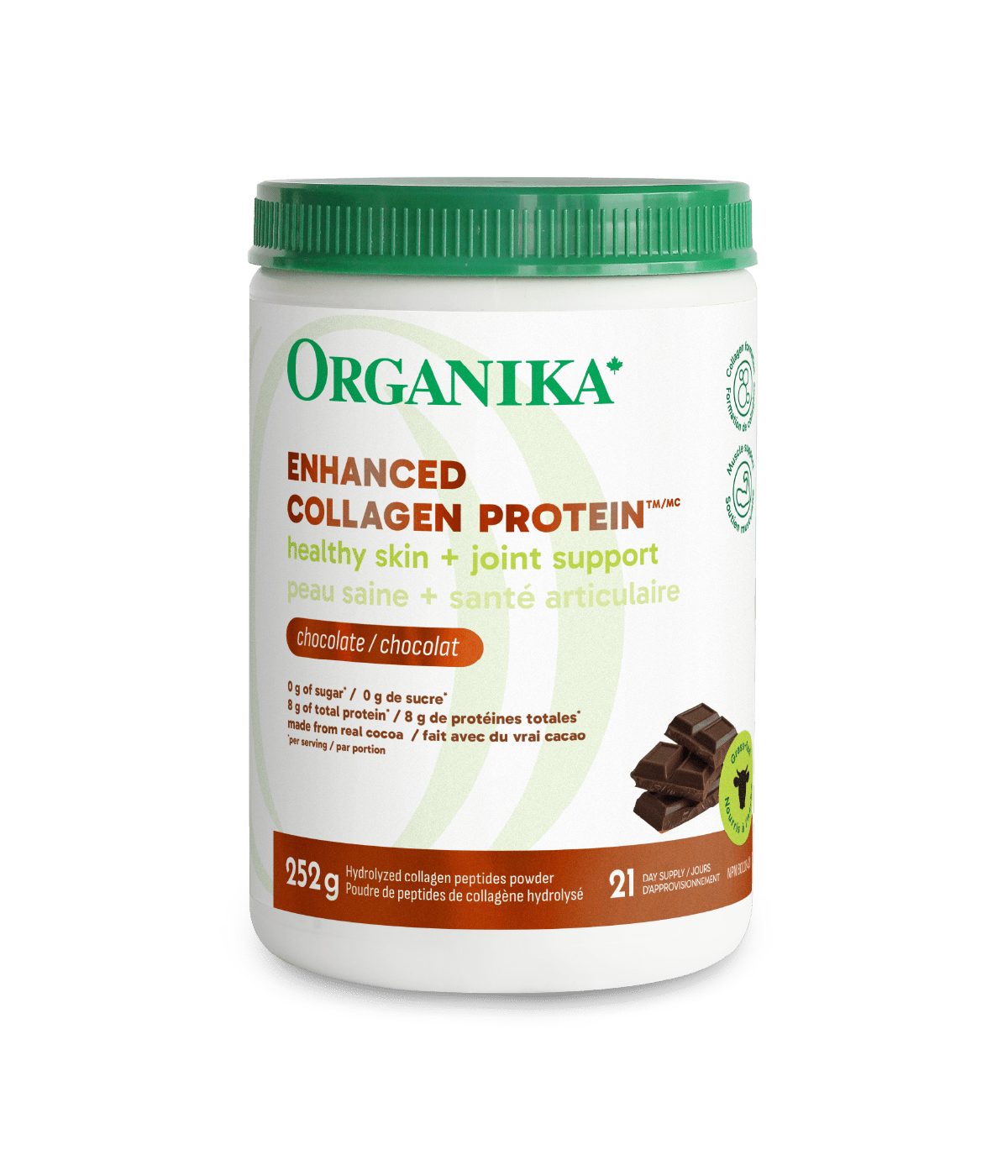
Enhanced Collagen Protein Chocolate
Healthier skin, hair, nails, joints & gut in a chocolatey drink with 0 g sugar
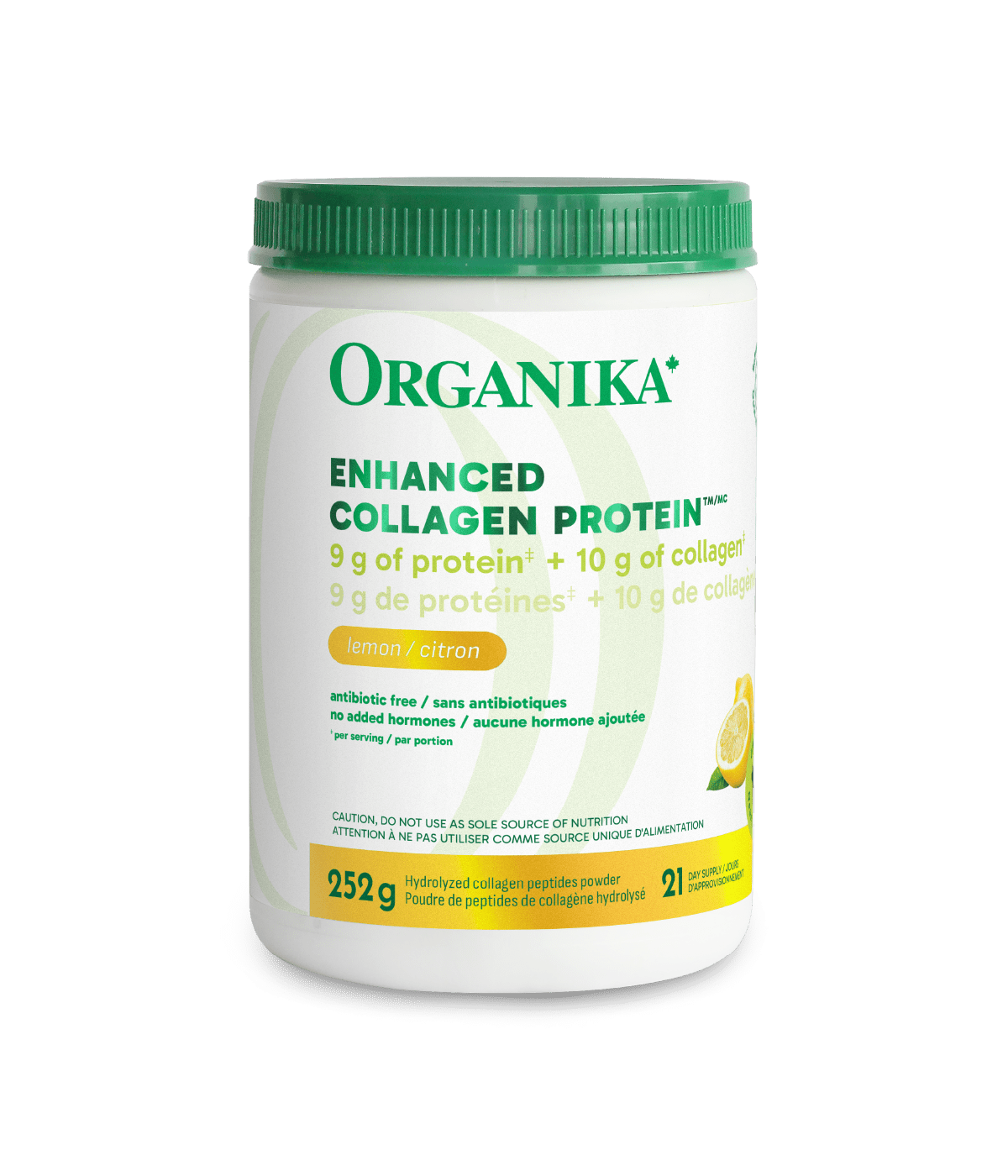
Enhanced Collagen Protein Lemon
Lemon flavoured collagen for healthier skin, hair, nails, joints, and gut
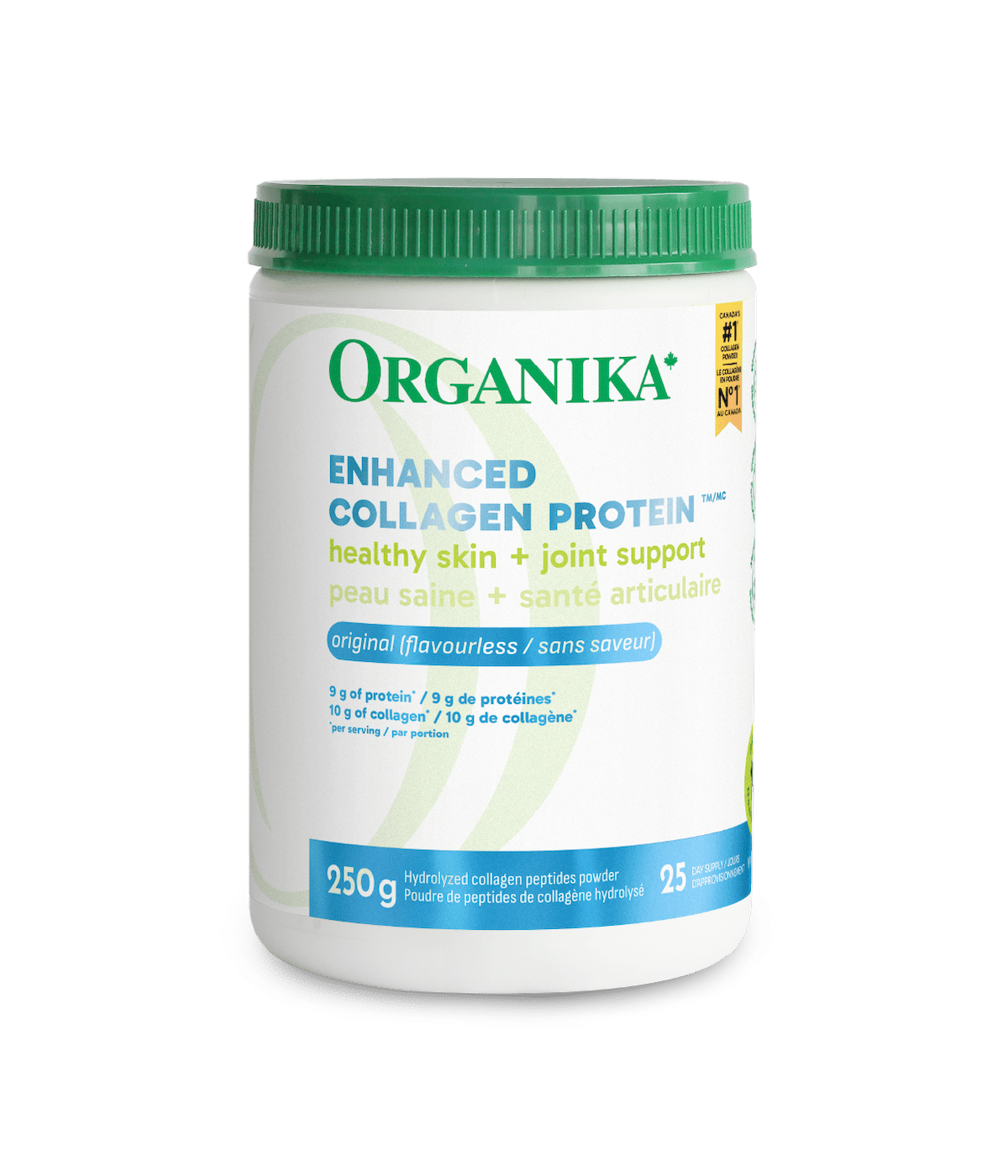
Enhanced Collagen Protein Original
Canada’s #1 Collagen Powder for healthier skin, hair, nails, joints and gut
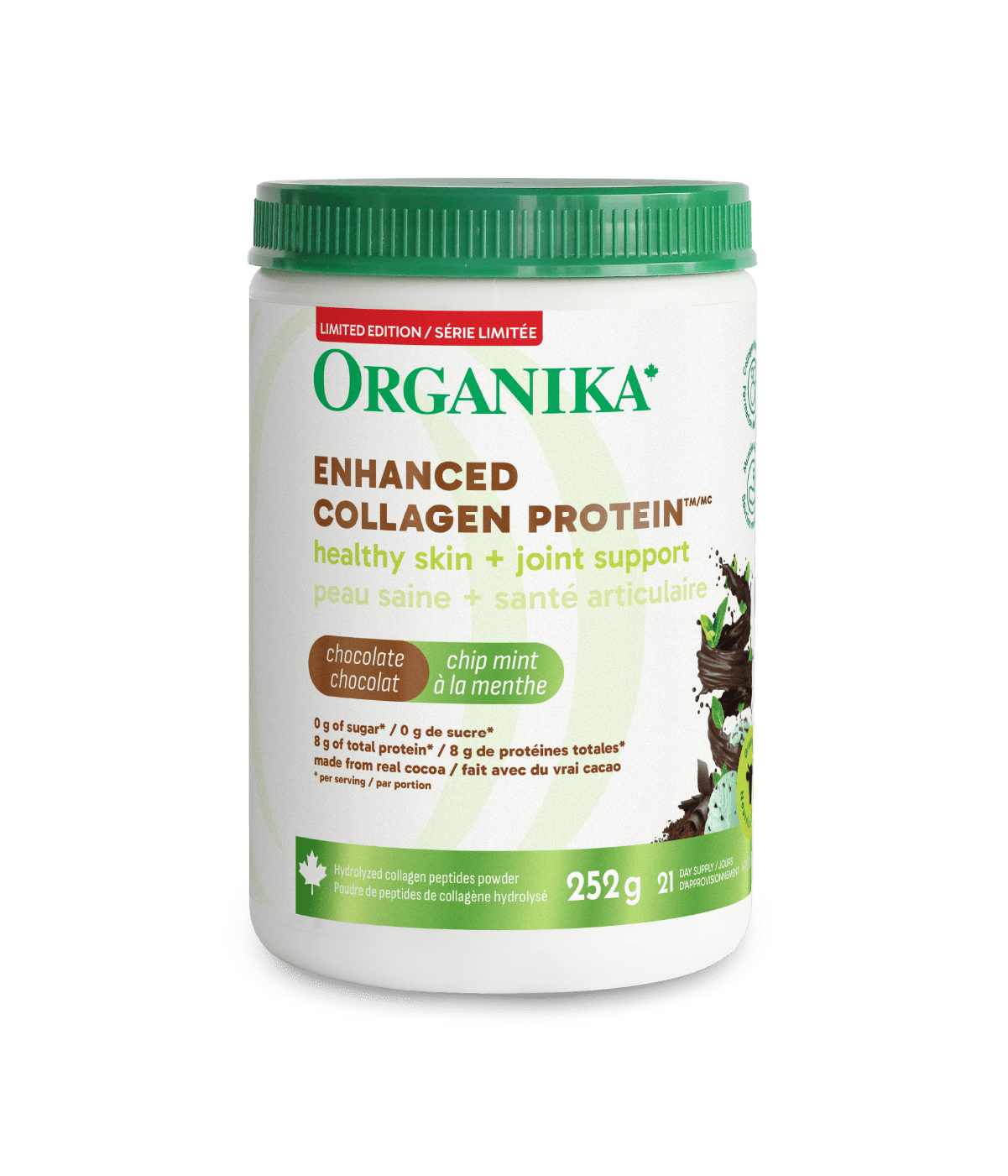
Dark Chocolate Chip Mint Enhanced Collagen Protein
Healthier skin, hair, nails, joints & gut in a Chocolate Chip Mint drink with 0 g sugar
Support Beyond Products

Understanding the difference between collagen and protein powder can help you make better choices for your wellness goals, whether that’s muscle growth, skin and joint support, or daily protein intake. Although both contain amino acids and count as proteins, they serve very different purposes in your diet and body. What Is Collagen? Collagen is the most abundant structural protein in the body, found in skin, bones, cartilage, tendons, hair, and nails. It provides strength, elasticity, and support to connective tissues. Unlike many protein powders (like whey or plant proteins), collagen: Is not a complete protein, it doesn’t contain all nine essential amino acids. Is rich in specific amino acids such as glycine, proline, and hydroxyproline, which help support tissues and structures throughout the body. Why take collagen powder? May support skin hydration and elasticity Helps maintain joint comfort and mobility Supports gut health Offers structural amino acids that can decline with age What Is Protein Powder? In contrast to collagen, most protein powders (including whey, plant-based, egg and casein) are designed to help you meet daily protein requirements and support functions like muscle maintenance, repair and growth. Protein powders differ based on their amino acid profile, digestibility, dietary preferences and goals. Scientific research indicates that both animal and plant proteins can support muscle mass and strength gains when total protein intake is adequate, although animal protein often shows a modest advantage in lean mass development due to higher essential amino acid availability (Santini, M, 2025). Protein powders are often used to support: Reaching daily protein goals Muscle recovery and strength gains Weight management and satiety Convenient nutrition when whole foods aren’t available Which One Should You Choose? When you’re choosing between collagen powder and a more traditional protein powder, it really comes down to what you’re trying to support in your life and body, not that one is “better” than the other for everyone. If your main goal is to meet daily protein needs, support muscle recovery after workouts, or build strength over time, a more complete protein powder (whether that’s whey or a thoughtfully blended plant-based option) tends to fit those needs more directly. These powders are formulated with all the essential amino acids your body looks for when it’s rebuilding and repairing tissues after movement or exercise. On the other hand, if you’re more focused on things like skin resilience, joint comfort, or connective tissue support, collagen protein can feel like a more tailored choice. Because it’s rich in specific amino acids that your body uses for structural proteins like collagen in skin and cartilage, many people find it helpful as a complement to their overall routine. Some individuals choose to use both. For example, a general protein powder after workouts to support muscle and strength goals, and collagen at other times to support skin, joint, or tissue health. There’s nothing stopping you from combining them, as long as you’re keeping an eye on your overall protein intake and how you feel. Everyone’s body and priorities are a little different, so it can be worth experimenting to find what feels best for you. Goal Recommended Muscle building and athletic performance Protein powder Skin, joints, hair, nails Collagen powder Balanced dietary protein Protein powder Targeted connective tissue support Collagen References Santini, M. H., Erwig Leitão, A., Mazzolani, B. C., Smaira, F. I., de Souza, M. S. C., Santamaria, A., Gualano, B., & Roschel, H. (2025). Similar effects between animal-based and plant-based protein blend as complementary dietary protein on muscle adaptations to resistance training: findings from a randomized clinical trial. Journal of the International Society of Sports Nutrition, 22(1), 2568047. https://doi.org/10.1080/15502783.2025.2568047
read more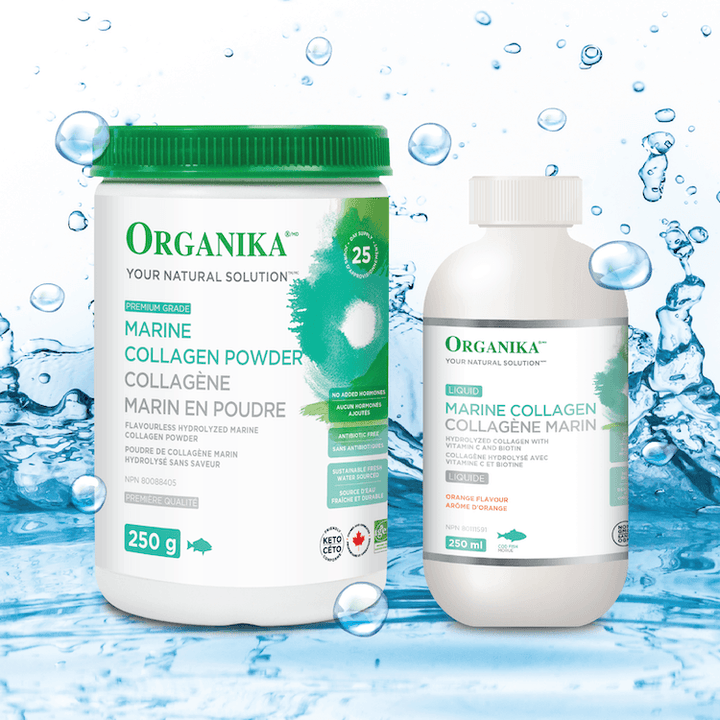
By now, you’ve probably heard all about the benefits of collagen and why collagen supplements have become so popular for supporting skin, joints, hair, gut health, and overall wellness. Great! But one question comes up again and again: is collagen powder better than liquid collagen?Which form is absorbed best, and which one delivers the most benefits? Let’s break it down. A Look at the Most Popular Forms of Collagen Supplements Collagen Powder Collagen powder is the most common and widely used form of collagen supplements. In fact, collagen exists in powder form before being dissolved into liquids. Most collagen powders are made from hydrolyzed collagen peptides, which means the large collagen proteins are broken down into smaller peptides for easier digestion and absorption. TIP: Always look for hydrolyzed collagen peptides powder when choosing a collagen supplement. If you’re not sure where to start, an unflavoured option that blends easily (like Enhanced Collagen Original) can be a simple, no-fuss pick for everyday use. The majority of scientific studies on collagen benefits have used collagen powder, which is why it is considered the most researched and well-supported format. How to use: Mix into water, coffee, smoothies, soups, baked goods, or foods of choice. Best for: Anyone who enjoys customizing how they take their collagen. Liquid Collagen Liquid collagen supplements are essentially collagen powder that has already been dissolved into a drink, often with added natural flavours or functional ingredients. Because of this, liquid collagen typically contains less collagen per serving compared to collagen powder. To reach the same collagen dosage, you may need to consume a larger volume of liquid—though for many people, the tradeoff is that it’s quick, easy, and requires zero prep. If you like the ready-to-take format but still want something that feels purposeful, a liquid option like Liquid Enhanced Collagen or Liquid Marine Collagen can be a convenient way to keep collagen support consistent, especially on busy days. Traditionally, most liquid options were made from marine collagen, but there are now both marine and bovine-based liquid collagen supplements available. How to use: Drink as directed, either as a full serving or by tablespoon depending on the product. Best for: Those who prefer convenience and ready-to-drink collagen. Collagen Capsules Collagen capsules simply contain powdered collagen, meaning they offer the same benefits as collagen powder—just in a convenient pill format. If you like the simplicity of a grab-and-go routine, something like BioCell Collagen Capsules can be an easy option to keep on hand for consistent daily support. How to use: Take as directed with water. Best for: People who prefer capsules over mixing powders into drinks or food. Your Collagen Questions Answered Which form is better absorbed, powder or liquid? All high-quality collagen supplements should be hydrolyzed, meaning the proteins are broken down for easy digestion and absorption. Since liquid collagen is just powdered collagen dissolved in liquid, both powder and liquid collagen are equally absorbable. The improved absorption comes from the hydrolyzation process, not from whether the collagen is taken in powder or liquid form. Are there added ingredients in one form versus another? Liquid collagen often includes added ingredients such as natural flavours or complementary nutrients. There are also collagen blends in powder form that combine collagen with other supplements for convenience. These blended formulas simply provide additional functional support alongside collagen. Which collagen format is most effective? Research shows that collagen supplements are effective, and most studies use collagen powder. Some liquid-only collagen brands claim higher bioavailability, but there is currently no scientific evidence showing that liquid collagen is absorbed better than powder. Again, it is the hydrolyzed collagen peptides that improve absorption, regardless of format. How much collagen do I get from powder versus liquid? Collagen powder typically contains significantly more collagen per serving than liquid collagen. For example: • 1 tablespoon of collagen powder may provide around 5 grams of collagen• 1 tablespoon of liquid collagen may provide around 1.5 grams of collagen This means you would need to consume much more liquid collagen to match the collagen intake of powder. With collagen powder, most people use 1 to 2 scoops per day. With liquid collagen, you may need multiple servings throughout the day to reach similar collagen levels. What Do the Experts Say? Many naturopaths and nutrition professionals agree that while liquid supplements in general may be absorbed slightly faster, collagen is not a quick-fix supplement like cold medicine. Because collagen works over time and is more potent in powder form, collagen powder is often preferred for long-term use. Nutritionists also point out that since both powder and liquid collagen come from the same hydrolyzed collagen source, both are bioavailable and absorbed well in the gut. Ultimately, both formats work in the same way. What Really Matters The best form of collagen is the one that fits your lifestyle. Collagen powder offers higher collagen content per serving and versatility, while liquid collagen provides convenience. More important than the format is: • The quality of the collagen• Whether it is hydrolyzed• The source of the collagen (marine or bovine) Choosing a high-quality collagen supplement will have a far greater impact than choosing between powder, liquid, or capsules. Learn more about collagen types here. REFERENCES: https://pubmed.ncbi.nlm.nih.gov/33742704/ de Miranda RB, Weimer P, Rossi RC. Effects of hydrolyzed collagen supplementation on skin aging: a systematic review and meta-analysis. Int J Dermatol. 2021 Dec;60(12):1449-1461. https://pubmed.ncbi.nlm.nih.gov/31411379/ Jhawar N, Wang JV, Saedi N. Oral collagen supplementation for skin aging: A fad or the future? J Cosmet Dermatol. 2020 Apr;19(4):910-912.
read more
Now that you know you need collagen, get the details about how much you need daily for maximum benefits. Collagen, often hailed as the elixir for youthful skin, has gained extensive popularity in the health and wellness world. If you’ve ever wanted to improve your skin, hair, bones, cartilage, you’ve likely come across collagen as a liquid or powder supplement. Many individuals are eager to incorporate collagen into their daily routines, but a common question prevails: "How much collagen should I take daily?" Let’s explore the optimal daily intake of collagen and how often you should be taking collagen supplementation to notice its effectiveness and potential benefits to your health. How Much Collagen Should I Take Per Day? When it comes to how much you should consume, studies suggest that a daily collagen intake of 2.5 to 15 grams is both safe and effective in promoting skin elasticity, hydration, and overall joint health (Choi et al., 2019). While eating high-collagen foods are great for health, supplementation helps meet your needs with ease. Is There a Minimum or Maximum Number of Collagen To Show Benefits? It’s important to recognize that the recommended daily intake of collagen is dependent on an individual’s specific needs and varies from person to person. Again, while there is no established Recommended Dietary Allowance (RDA) for collagen, research indicates that 2.5 to 15 grams of hydrolyzed collagen per day may contribute to overall health and well-being, depending on factors such as age, lifestyle, and specific health goals. There is currently no documented maximum intake of collagen. In addition to supplementation, making positive lifestyle changes can significantly impact your body’s natural collagen production. Smoking, neglecting sun protection or not getting enough sleep will work against your body’s ability to make collagen. Consistency is Key with Collagen Collagen turnover is a slow process. As such, no matter your goal for using collagen, it will take at least 8 weeks to experience noticeable results (Choi et al, 2019). Most studies use a minimum of 8 weeks to assess collagen’s effects on skin health and joint pain relief, but other studies use longer periods, even up to 12 months, to see an effect for bone health (König et al, 2018). When it comes to achieving health goals, consistency is key - and that’s no different with taking collagen. Since collagen is a structural protein that forms the building blocks of our skin, hair, nails, and connective tissues, taking it daily can contribute to maintaining these structures and supporting their optimal function over time. For more in depth details on the benefits of taking collagen daily, check out this blog: What is Collagen? Health Benefits & More. The Bottom Line The optimal daily intake of collagen varies from person to person, but a range of 2.5 to 15 grams per day is considered effective for many people. While there is no established RDA, having a consistent daily intake of collagen will be most helpful to see tangible results. Whether you're aiming to enhance skin radiance, support joint health, or strengthen hair and nails, incorporating collagen into your daily routine could be a key factor in achieving your wellness goals. FInd your perfect collagen match with this 2 minute quiz. References Choi FD, Sung CT, Juhasz ML, Mesinkovsk NA. Oral Collagen Supplementation: A Systematic Review of Dermatological Applications. J Drugs Dermatol. 2019 Jan 1;18(1):9-16. PMID: 30681787. König D, Oesser S, Scharla S, Zdzieblik D, Gollhofer A. Specific Collagen Peptides Improve Bone Mineral Density and Bone Markers in Postmenopausal Women-A Randomized Controlled Study. Nutrients. 2018 Jan 16;10(1):97. doi: 10.3390/nu10010097. PMID: 29337906; PMCID: PMC5793325.
read more