










.png?v=1787082946714)
.png?v=1787082955721)


-
Is this right for you?

-
-
-

-

-

Fibre Gummies
Daily prebiotic fibre gummies that feel like a small treat and build a big wellness habit.
- Helps support and maintain a healthy digestive system
- Gentle relief from constipation and irregularity
- Helps nourish your gut microbiome
- Daily prebiotic fibre, made enjoyable
Couldn't load pickup availability


Notify Me When Available
Enter your email and we'll let you know as soon as this product is back

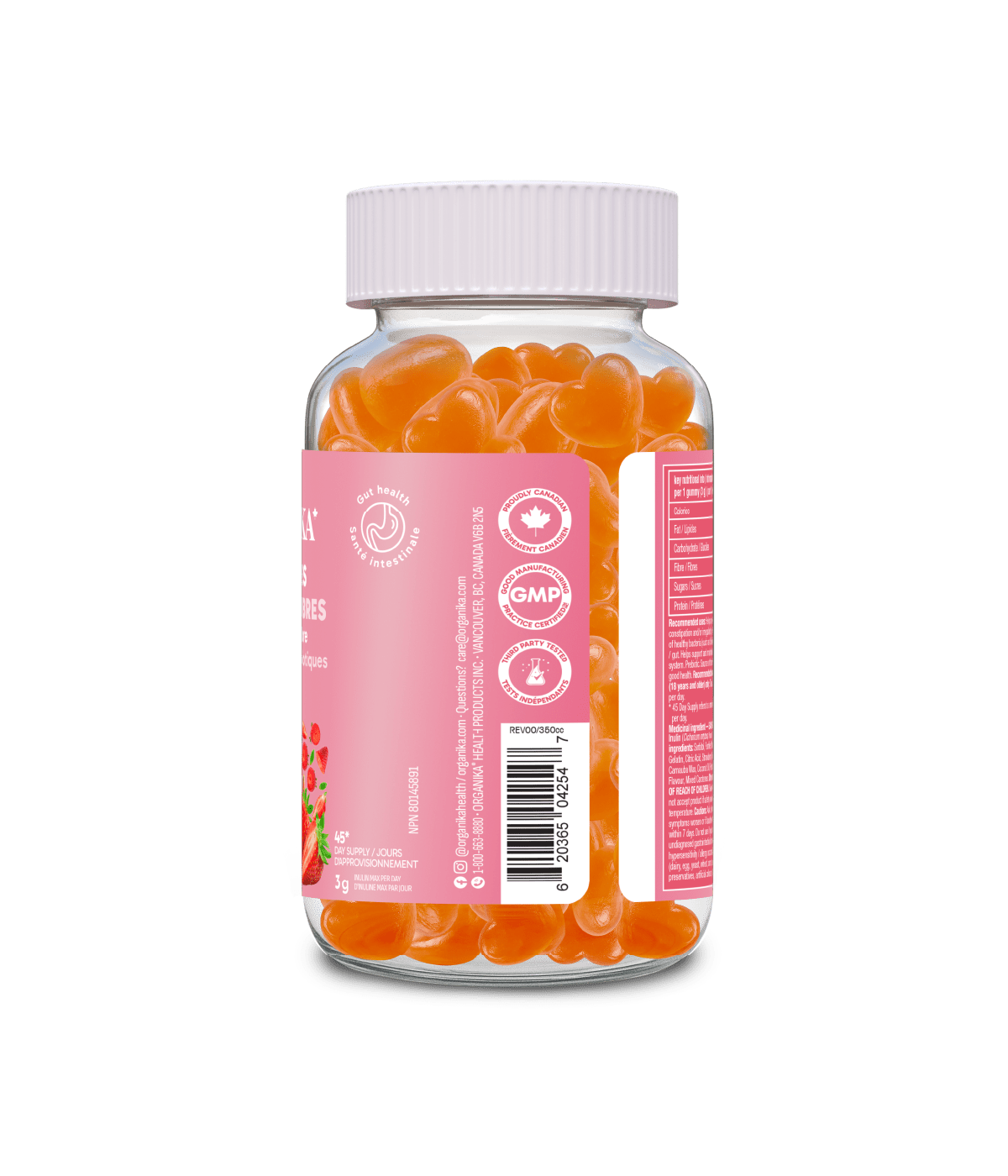
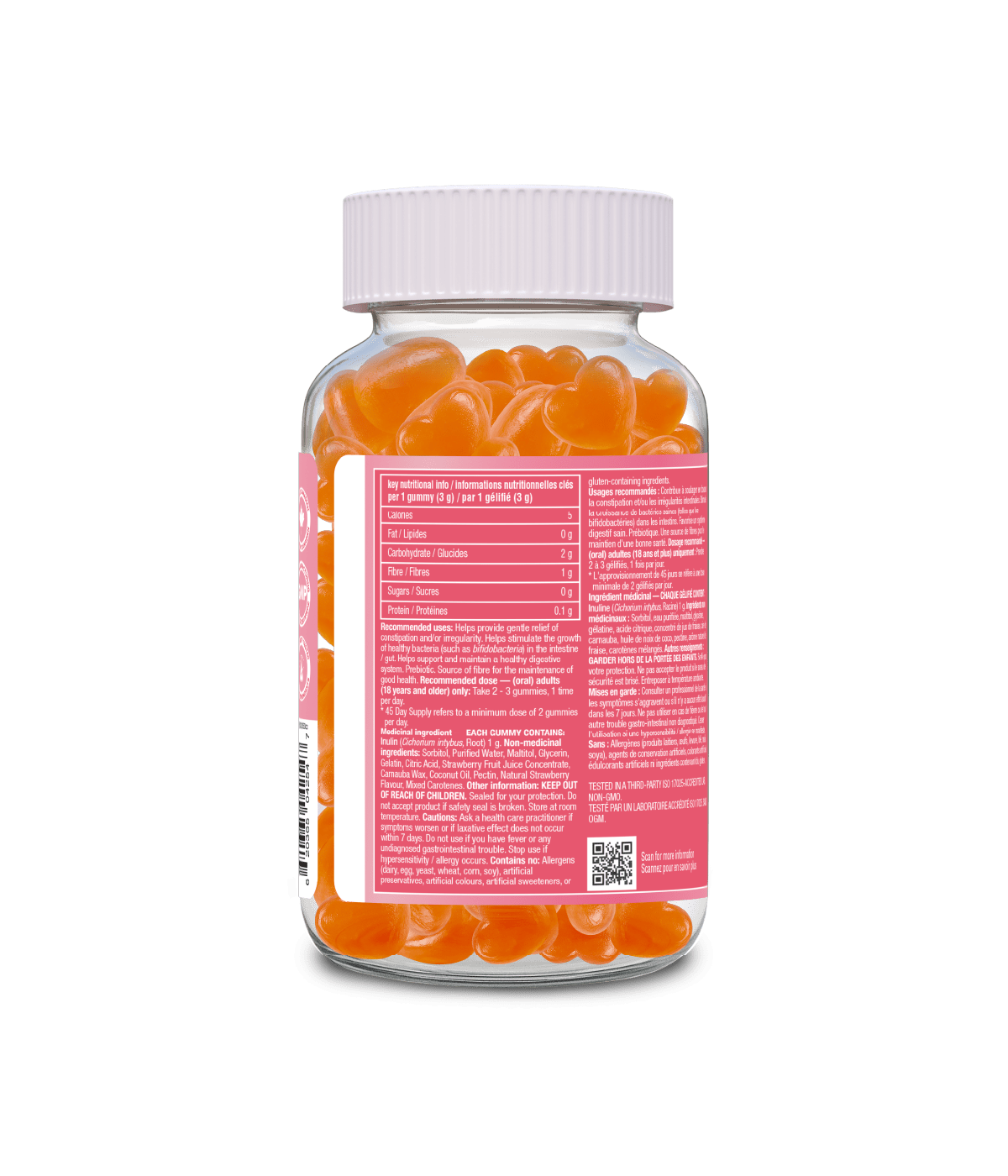
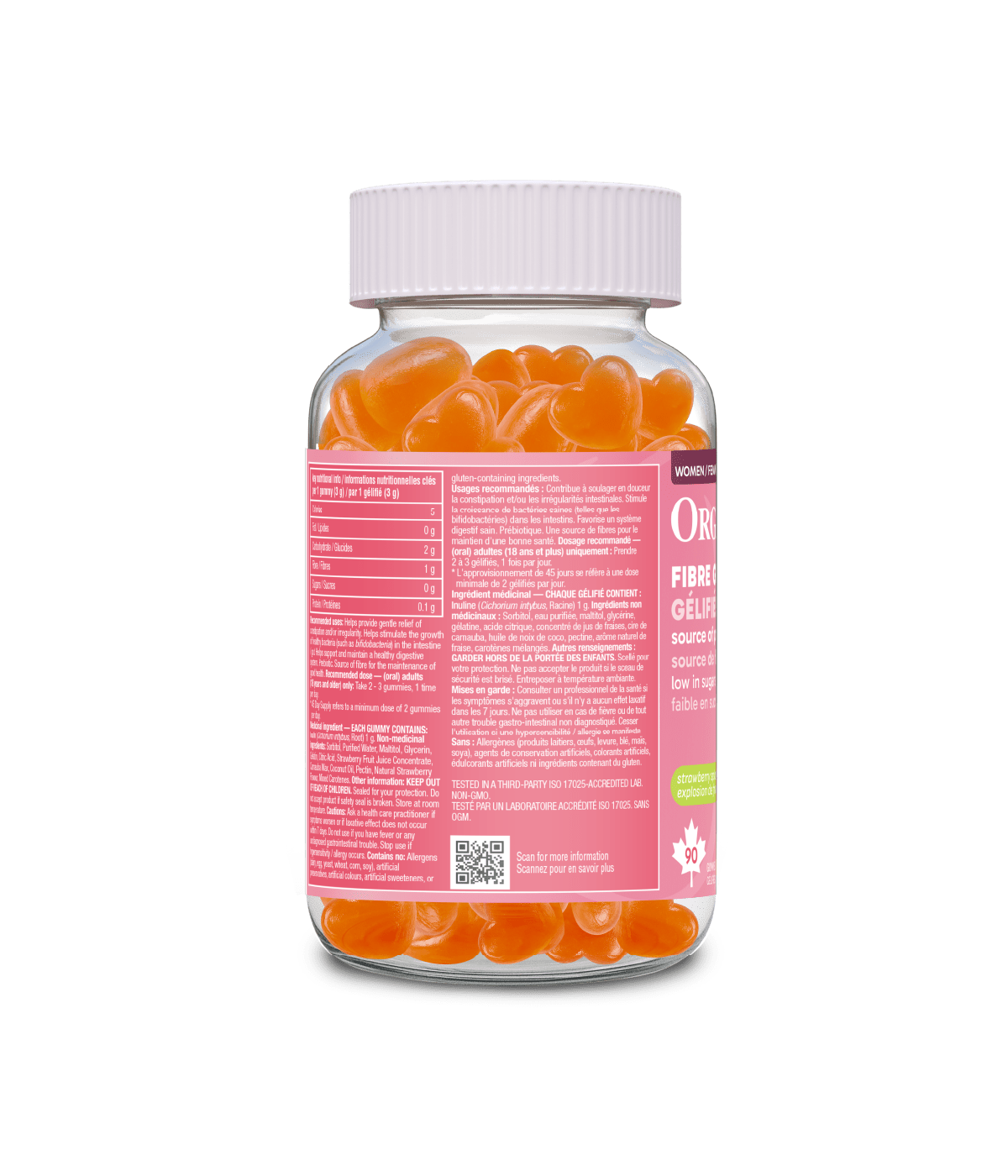
Supplement Facts


Ingredients & Nutrition






Medicinal ingredients — EACH GUMMY CONTAINS: Inulin (Cichorium intybus, Root) 1 g.
Non-medicinal ingredients: Sorbitol, Purified Water, Maltitol, Glycerin, Gelatin, Citric Acid, Strawberry Fruit Juice Concentrate, Sodium Citrate, Pectin, Strawberry Flavour, Mixed Carotenes, Carnauba Wax, Coconut Oil.
Contains no: Allergens (dairy, egg, yeast, wheat, corn, soy), artificial preservatives, artificial colours, artificial sweeteners, or gluten containing ingredients.
Recommended Dose: Take 2 - 3 gummies, 1 time per day.
Cautions: Ask a health care practitioner if symptoms worsen or if laxative effect does not occur within 7 days. Do not use if you have fever or any undiagnosed gastrointestinal trouble. Stop use if hypersensitivity / allergy occurs.
Is This Right for You?
Do you struggle to get enough fibre each day?
Are you looking for an easier way to support digestive health?
Do you want a wellness habit you'll actually keep?
If you answered ''yes'' to any of the above, this product is right for you.

-
Helps nourish your gut microbiome
-
Daily prebiotic fibre, made enjoyable
Ingredients & Nutrition
Gluten-Free
Soy-Free
Egg-Free
No Preservatives
Dairy-Free
No Artificial Sweeteners
Fibre Gummies turn daily fibre into something you'll actually look forward to, making it easier to get the prebiotic fibre your digestive system needs every day.


Why we Made Fibre Gummies
-
Helps nourish your gut microbiome
-
Daily prebiotic fibre, made enjoyable
Organika Fibre Gummies transform daily fibre into an enjoyable part of your routine with a delicious Strawberry Splash flavour you'll want to reach for.
Unlike other types of fibre, inulin helps stimulate the growth of healthy bacteria in the intestine, supporting a healthy gut microbiome, digestive system and overall maintenance of good health. It also helps provide gentle relief of constipation and irregularity.
With no mixing, measuring or drinks to prepare, Fibre Gummies fit easily into busy mornings, workdays and everyday routines, making daily fibre a habit you'll actually want to keep.
Ask Away
We’ve got the FAQs covered. But if you’re still stuck, we’re only a message away.
Get in TouchHow does inulin support digestive health?
Inulin is a soluble fibre that feeds beneficial gut bacteria, helping support regular digestion and overall gut balance.
Can this product help with occasional constipation?
Yes, inulin may help promote regular bowel movements by increasing fibre intake.
How long should I use this product before seeing digestive benefits?
Some people notice benefits within a few days to a couple of weeks of regular use.
Can I take this product if I have a digestive condition?
If you have a digestive condition, it's best to consult a healthcare professional before use.
How should this product be stored?
Store in a cool, dry place away from moisture and heat.
Is inulin also considered a prebiotic fibre?
Yes, inulin is a well-known prebiotic fibre that supports beneficial gut bacteria.
Can this product be taken daily?
Yes, it is suitable for daily use as part of your regular fibre intake.
Is this supplement suitable for long-term use?
Yes, inulin is generally safe for long-term daily use when taken as directed.
You'll Likely Also Love...

Belli-Bliss™ Fibre Complete
Better fibre, better days
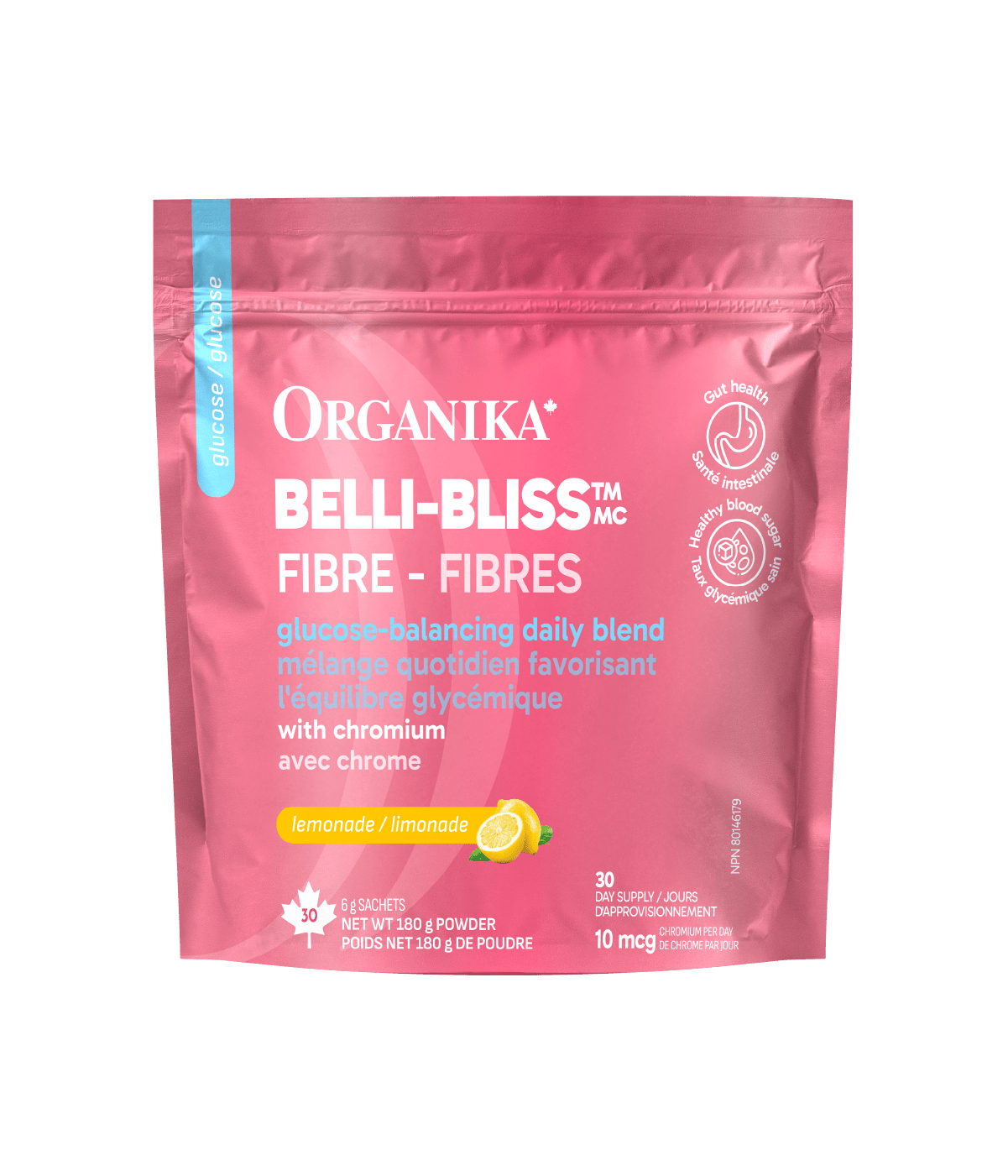
Belli-Bliss™ Glucose Fibre
Targeted support for gut and glucose health

Belli-Bliss™ Fibre Hydration
Better fibre, better hydration, better days

Collagen Gummies
Your collagen support in a tasty gummy + extra beauty support
Support Beyond Products

Fibre, sometimes affectionately referred to as roughage, sounds like it is not the most exciting topic in nutrition, but if only you knew how much it can benefit you! What is fibre? Fibre is molecularly a carbohydrate that your body does not fully break down in the digestive tract. It can be grouped into 2 categories: Soluble and insoluble. Examples of foods that contain soluble fibre are things like fruit, oats, barley, and legumes. Examples of foods that contain insoluble fibre are vegetables, wheat, and most grains. What are the benefits of fibre? HEALTHY ELIMINATION Insoluble fibre and some soluble fibre has the capacity to hold water and help make stools bulkier and softer, helping with constipation. Dietary fibre in general can help speed up the transit time of intestinal contents in those with initially slow transit time, and can slow transit time in people with initially rapid initial transit time. Thus, it can also help with those with chronic diarrhea. Soluble fibre combines with liquid so it is like a gel, and this slows your stomach emptying and can help decrease over eating and help with weight loss or maintaining a healthy weight. SUPPORTS DETOXIFICATION Fibre helps binds toxins in your guts and then carries them out to eliminate them. As it supports regularity of your bowel movements, it is supporting one of your body’s detoxification processes. DECREASES UNHEALTHY CHOLESTEROL LEVELS Soluble fibres may lower cholesterol levels by increasing bile acid which help breakdown and excrete excess cholesterol. FEEDS GUT BACTERIA The benefits of supporting healthy gut bacteria are vast, from supporting digestion, immunity, and even mental health. Your healthy gut flora, both quantity, and varieties, thrive when you have a high fiber diet, which is rich in food that your probiotics feed on, called prebiotics. This form of fiber is what you can find in Organika’s Mylks series. DIABETES Both types of fibre delay glucose absorption from the small intestine, and so it is useful for preventing and treating diabetes. Both type 1 and type 2 diabetes can benefit from a diet high in fibre, even possibly reducing or discontinuing anti-diabetes medication as a result of improved blood sugar control. How much fibre do you need? It is preferable in most cases to obtain fibre from diet, so increasing whole foods (i.e. the whole rice grain, not ground up or as rice pasta for example) and lots of fruits and vegetables is a great start. When it comes to supplementing fibre with certain preparations it depends on what type you are using and the condition it is being used for. Some points to keep in mind It is important to consider that not all fibre intake will benefit everyone in every circumstance. It is important to listen to your body, and if you are finding that higher fibre is irritating, it could be due to a gut “imbalance” which will need to be addressed and corrected first before making fibre a priority. Everyone is different.
read more
When people ask, what is fibre, they’re usually thinking about digestion or constipation. But fibre does much more than help with regularity. It also plays a role in gut health, fullness, cholesterol, and blood sugar. What is fibre? Fibre is a type of carbohydrate found in plant foods, but unlike other carbohydrates, your body does not fully digest it. Instead of being broken down into sugar and absorbed, fibre moves through the digestive tract and supports different functions along the way. You’ll find dietary fibre in foods like fruits, vegetables, legumes, nuts, seeds, oats, barley and whole grains. In Canada, fibre is recognized as an important part of a healthy diet because it may support bowel regularity, help lower blood cholesterol and help you feel full longer (Health Canada, 2025). Why is fibre important? If you’ve ever wondered why fibre is important or what it does, the answer is that it works in several ways at once. One of it’s best-known jobs is supporting digestive health. It can add bulk to stool, help stool move through the intestines and support healthy bowel movements, which is why fibre is often discussed for regularity and constipation (MedlinePlus, 2024). But the benefits of it go beyond that. Certain fibres can help slow digestion, support steadier blood sugar responses after meals and help with satiety, which is why fibre also comes up in conversations about appetite control, weight loss, and healthy eating habits. To understand how fibre works, it helps to think about its effect in the following three: absorption, glycemia and cholesterol. Fiber alters how nutrients are absorbed. The viscous gel formed by soluble fiber slows gastric emptying and the enzymatic digestion of carbohydrates, thereby blunting post-meal glucose and insulin spikes (Daley and Shreenath, 2026). Additionally, gel-forming fibers bind bile acids in the small intestine; when these bile acids are excreted, the liver must use more cholesterol to make new bile, lowering blood LDL cholesterol (the “bile acid binding” effect). Insoluble fiber has a subtler effect on blood sugar by diluting intestinal contents and speeding transit, but it similarly contributes to overall glycemic control. Together, these actions mean that high-fiber diets improve glucose regulation and lipid profiles, reducing risks of diabetes and heart disease. Soluble and insoluble fibre: What's the difference? One of the most common questions people ask is the difference between both types of fibre. Both matter and offer important health benefits, but they behave differently in the body. They are classified according to water solubility. Soluble Fibre Soluble fibres (e.g. pectin, gums, inulin, β-glucans) dissolve in water and form a gel during digestion. This can help slow digestion and is one reason it's associated with cholesterol and blood sugar support and feeling fuller for longer. Soluble fibre is found in foods such as oats, barley, beans, lentils, peas, nuts, seeds, apples and some other fruits and vegetables. Psyllium, a common fibre derived from the seeds of Plantago ovata, is popular to treat constipation. Its powder form can be mixed into water or juice for convenience. Because it slows digestion, it can leave you feeling fuller for longer. However, hydration is key to preventing intestinal blockage. Insoluble fibre Insoluble fibers (e.g. cellulose, lignin, some hemicelluloses) remain intact, that means they do not dissolve in water. Instead, it helps add bulk and move material through the digestive tract. That is why insoluble fibre is commonly linked with regularity and fibre for constipation. Good sources include wheat bran, whole grains, vegetables, legumes, nuts, seeds, brown rice, quinoa and fruits with edible skins (The Nutrition Source, 2012). How much fibre per day? If you’re asking how much fibre per day you should aim for, Health Canada states that adult women need about 25 grams of fibre per day and adult men need about 38 grams per day (Canada, 2025). Most Canadians are only getting about half that much, which helps explain why the topic of how to get more fibre matters so much. If your goal is to improve your intake, one of the best places to start is with high fibre foods. Good food sources of fibre include: Fruits Raspberries (1 cup = 8g of fibre) Banana (1 = 3g of fibre) Pear (1 = 5.5g of fibre) Apple ( 1 = 3g of fibre) Vegetables Broccoli (1 cup chopped = 5g of fibre) Green peas (1 cup boiled = 9g of fibre) Brussel sprouts (1 cup = 4.5g of fibre) Potato (1 medium size = 4g of fibre) Grains Spaghetti whole-wheat (1 cup = 6g of fibre) Barley, pearles, cooked (1 cup = 6g of fibre) Quinoa (1 cup = 5g of fibre) Oatmeal (1 cup = 4g of fibre) Brown rice (1 cup = 3.5g of fibre) Legumes, nuts and seeds Lentils (1cup = 15.5g of fibre) Black beans (1 cup = 15g of fibre) Chia seeds (1 ounce = 10g of fibre) Almonds (1 ounce = 3g of fibre) The easiest way to add fibre to the diet is through simple daily habits: having oats for breakfast, adding beans or lentils to soups or salads, including fruit and vegetables more often as snacks and swapping in more whole-grain options where possible. So, what is fibre? It is a simple but important part of everyday wellness, supporting digestion, satiety, cholesterol, blood sugar, and the gut microbiome. Starting with high-fibre foods, building gradually, and staying hydrated can go a long way. And if you are looking for an easy way to complement those habits, Organika’s Belli-Bliss fibre line is worth keeping in mind as part of a balanced routine. References Canada, H. (2025). Fibre - Canada.ca. Canada.ca. https://www.canada.ca/en/health-canada/services/nutrients/fibre.html Daley, S. F., & Shreenath, A. P. (2025, December). The Role of Dietary Fiber in Health Promotion and Disease Prevention: A Practical Guide for Clinicians. Nih.gov; StatPearls Publishing. https://www.ncbi.nlm.nih.gov/books/NBK559033/#:~:text=nutrient%20absorption%2C%20and%20gastrointestinal%20health,bile%20acids%2C%20modestly%20lowering%20LDL Fiber: MedlinePlus Medical Encyclopedia. (2024). MedlinePlus. https://medlineplus.gov/ency/article/002470.htm Fu, J., Zheng, Y., Gao, Y., & Xu, W. (2022). Dietary Fiber Intake and Gut Microbiota in Human Health. Microorganisms, 10(12), 2507. https://doi.org/10.3390/microorganisms10122507 Health Canada. (2025). Fibre - Canada.ca. Canada.ca. https://www.canada.ca/en/health-canada/services/nutrients/fibre.html Soluble vs. insoluble fiber: MedlinePlus Medical Encyclopedia. (2024). Medlineplus.gov. https://medlineplus.gov/ency/article/002136.htm The Nutrition Source. (2012, September 18). Fiber - The Nutrition Source - Harvard Chan School. https://nutritionsource.hsph.harvard.edu/carbohydrates/fiber/
read more